Digital Footprint — Passive, Active, Identity and Identity Theft
Eduqas ICT (5539)U1 L44GCSELesson packSubscription
Also online
This worksheet marks itself
Set it as homework or classwork and every answer is marked as pupils go, with feedback on what they got wrong. The scores go straight into your mark book, so you can see who needs help before the next lesson.
- 8 questions
- 25 marks
- about 30 minutes
- marked instantly
Question types: multiple choice, short answer, fill the gap, true or false, matching.
About this resource
Eduqas/WJEC ICT 5539, Unit 1 (1.3.7) — the FINAL lesson of the 44-lesson unit. Covers the difference between a passive digital footprint (data collected about a person without a deliberate action — IP address, location, cookies, device information, browsing and search history) and an active digit…
19 slides.
Lesson outline
- Do Now — Retrieval from Last Lesson (New Media)
- Keywords for This Lesson
- Passive vs Active — Two Very Different Trails
- Hinge Question — Is Your Footprint Only What You Posted?
- The Passive Footprint, in Detail
- Quick Check — Passive or Active?
- Online Identity — How You Appear to Others
- Discuss — One Person, Several Identities
- Identity Theft — How It Happens
- Identity Theft — Reducing the Risk
- Hinge Question — Where Does Identity Theft Actually Come From?
- What You Control, and What You Don't
Unit bundleUnit 1 · Lessons
More from Unit 1 · Lessons
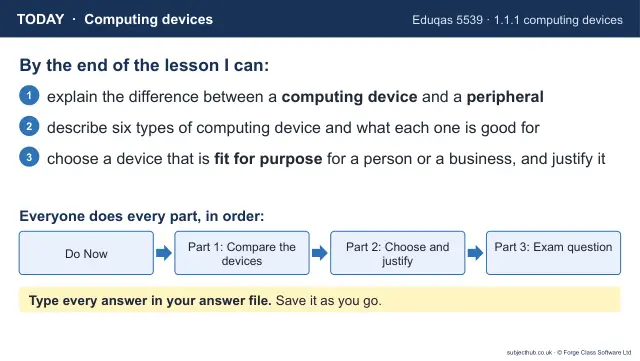
- Lesson pack · U1 L01Computing DevicesSubscription
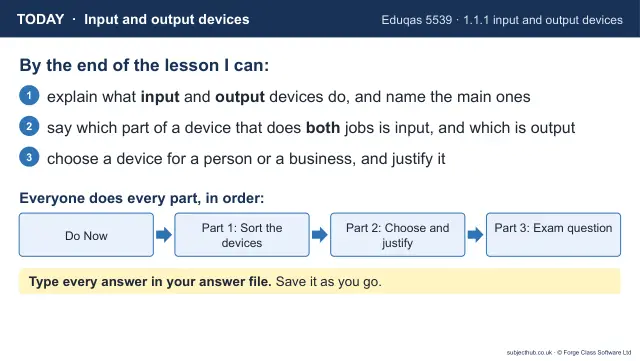
- Lesson pack · U1 L01bInput and Output DevicesSubscription
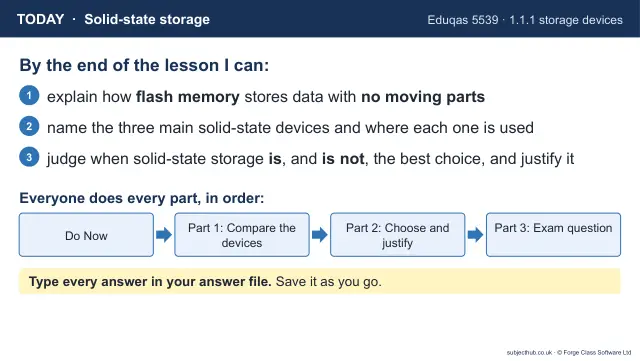
- Lesson pack · U1 L02Solid-State StorageSubscription
- Lesson pack · U1 L03Magnetic StorageSubscription
- Lesson pack · U1 L04Optical StorageSubscription
- Lesson pack · U1 L05Cloud StorageSubscription
- Lesson pack · U1 L06Internal ComponentsSubscription
- Lesson pack · U1 L07Systems SoftwareSubscription