Hot deserts: living with heat and drought
KS3 GeographyL8KS3Lesson packSubscription
Also online
This worksheet marks itself
Set it as homework or classwork and every answer is marked as pupils go, with feedback on what they got wrong. The scores go straight into your mark book, so you can see who needs help before the next lesson.
- 11 questions
- 33 marks
- about 30 minutes
- marked instantly
Question types: calculation, multiple choice, true or false, multi-part, label the diagram.
Try one from this worksheet
Which statement tells you what makes a place a desert?
Pick an answer: it's marked straight away, just as your pupils would see it.
About this resource
Find out why hot deserts are so dry, hot by day and cold at night, and how camels, cacti and fennec foxes survive heat and drought.
14 slides.
Lesson outline
- Hook
- Do Now — Retrieval
- Keywords for This Lesson
- The climate of a hot desert
- Desert survivors
- I Do: why are desert nights cold?
- Hinge Check
- We Do: the camel
- Keeping cool or saving water?
- Explain how plants and animals survive in hot deserts
- Self-Check
- Homework
Unit bundleEcosystems and biomes
More from Ecosystems and biomes
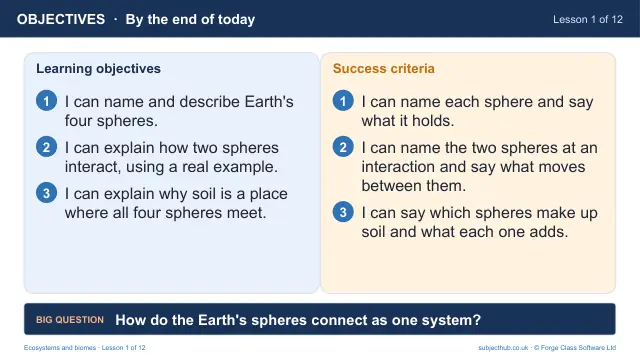
- Lesson pack · L1Earth's spheres: how do the systems connect?Free
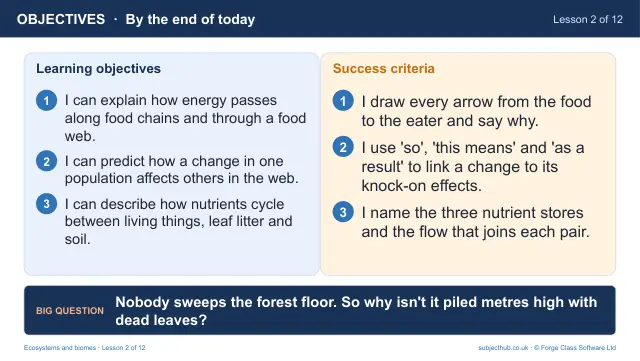
- Lesson pack · L2Ecosystems: food chains, food webs and nutrientsSubscription
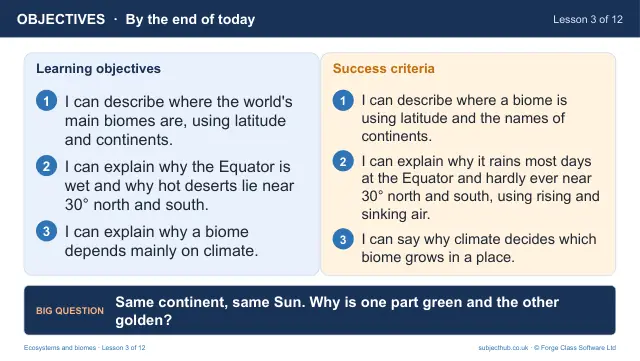
- Lesson pack · L3Global biomes: where are they and why?Subscription
- Lesson pack · L4Climate graphs: reading and drawingSubscription
- Lesson pack · L5Tropical rainforests: climate, layers and adaptationsSubscription
- Lesson pack · L6Deforestation in the AmazonSubscription
- Lesson pack · L7Protecting rainforests: Costa RicaSubscription
- Lesson pack · L9Polar environments: Antarctica and the Arctic tundraSubscription