Storage and Memory
KS3Lesson packSubscription
Also online
This worksheet marks itself
Set it as homework or classwork and every answer is marked as pupils go, with feedback on what they got wrong. The scores go straight into your mark book, so you can see who needs help before the next lesson.
- 11 questions
- 37 marks
- about 35 minutes
- marked instantly
Question types: multiple choice, label the diagram, true or false, ordering, sorting.
Try one from this worksheet
RAM is a type of memory found inside computers and smartphones. What is RAM primarily used for?
Pick an answer: it's marked straight away, just as your pupils would see it.
About this resource
RAM vs ROM, primary vs secondary storage, the speed ladder (RAM, SSD, HDD, cloud storage), storage units (bit, byte, KB, MB, GB, TB), and choosing storage for a purpose.
15 slides.
Lesson outline
- Hook — Two Numbers
- Do Now — Retrieval
- Keywords for This Lesson
- Primary Storage — RAM and ROM
- Hinge Check — RAM or ROM?
- The Speed Ladder — Fast and Small to Slow and Big
- Task 1 (guided) — Climb Down the Ladder
- Secondary Storage — Keeping Files for Good
- Task 2 (semi-guided) — Primary or Secondary?
- Storage Units — How We Measure Data
- Hinge Check — Ordering Units
- Task 3 (semi-guided) — How Many Songs?
Unit bundleInside the Machine
More from Inside the Machine
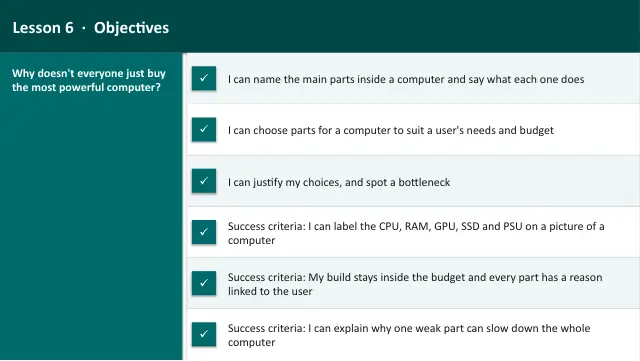
- Lesson packBuild a ComputerSubscription
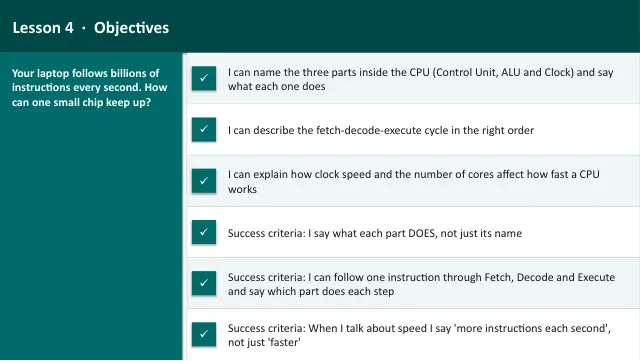
- Lesson packHow the CPU WorksSubscription
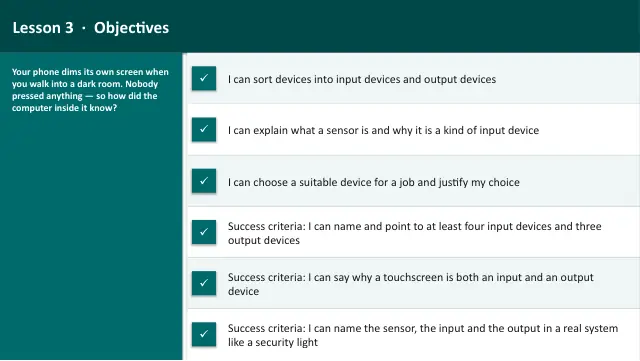
- Lesson packInput, Output and Sensor DevicesSubscription
- Lesson packInside the BoxSubscription
- Lesson packWhat Is a Computer?Subscription
- Knowledge organiserInside the MachineSubscription
- Scheme of workInside the MachineSubscription