Urbanisation: why are cities growing?
KS3 GeographyL7KS3Lesson packSubscription
Also online
This worksheet marks itself
Set it as homework or classwork and every answer is marked as pupils go, with feedback on what they got wrong. The scores go straight into your mark book, so you can see who needs help before the next lesson.
- 11 questions
- 30 marks
- about 30 minutes
- marked instantly
Question types: short answer, multiple choice, true or false, matching, sorting.
Try one from this worksheet
Choose the statement that says what urbanisation means.
Pick an answer: it's marked straight away, just as your pupils would see it.
About this resource
Find out what urbanisation and urban growth mean, how the share of people living in cities has changed since 1950, and why cities keep growing.
15 slides.
Lesson outline
- Hook
- Do Now — Retrieval
- Keywords for This Lesson
- Where the world's people live, 1950 and 2025
- Two ways a city grows
- I Do
- Hinge Check
- We Do
- The world's three largest cities, 2025
- Push or pull?
- Explain why cities are growing
- Self-Check: a model answer
Unit bundlePeople, migration and cities
More from People, migration and cities
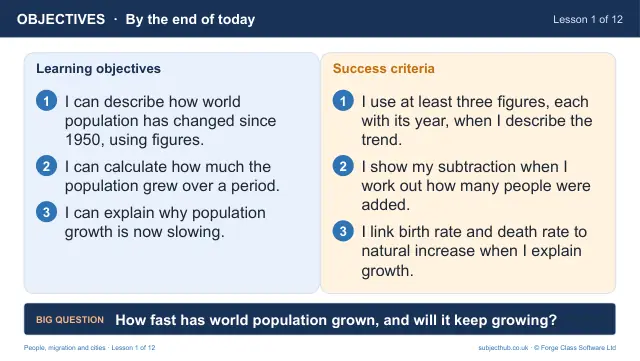
- Lesson pack · L1World population: how fast is it growing?Free
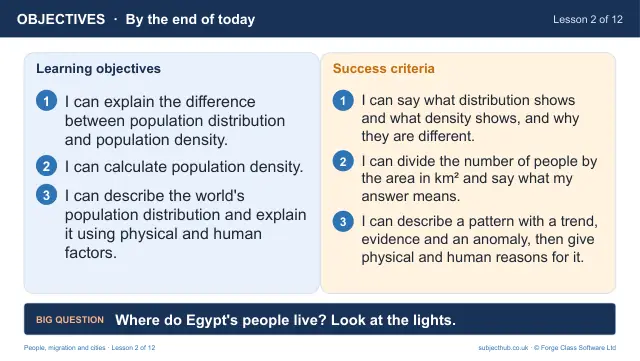
- Lesson pack · L2Where do people live? Distribution and densitySubscription
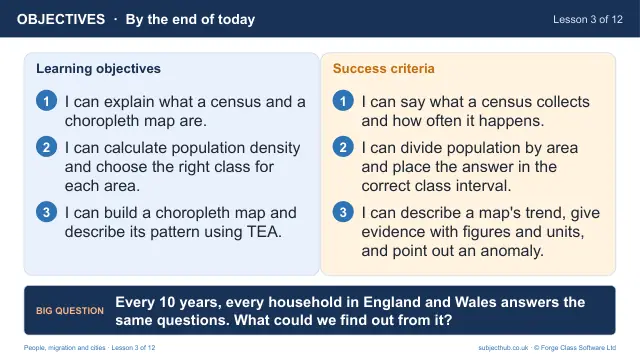
- Lesson pack · L3Mapping people with GIS: census choropleth mapsSubscription
- Lesson pack · L4Population pyramidsSubscription
- Lesson pack · L5Why do people migrate?Subscription
- Lesson pack · L6Migration: routes, refugees and the UKSubscription
- Lesson pack · L8How has a UK city changed?Subscription
- Lesson pack · L9What makes a city sustainable?Subscription