Six-figure grid references
KS3 GeographyL8KS3Lesson packSubscription
Also online
This worksheet marks itself
Set it as homework or classwork and every answer is marked as pupils go, with feedback on what they got wrong. The scores go straight into your mark book, so you can see who needs help before the next lesson.
- 12 questions
- 28 marks
- about 30 minutes
- marked instantly
Question types: multiple choice, true or false, matching, short answer, fill the gap.
Try one from this worksheet
How many figures does a six-figure grid reference have in total?
Pick an answer: it's marked straight away, just as your pupils would see it.
About this resource
We use a romer to turn a four-figure grid square into an exact six-figure reference, so we can pinpoint one precise spot on a map.
14 slides.
Lesson outline
- Hook
- Do Now — Retrieval
- Keywords for This Lesson
- Counting Tenths With a Romer
- I-do: the Church's Six-Figure Reference
- Poll
- We-do: the Stack's Six-Figure Reference
- Give Three More Six-Figure References
- Locate a Given Six-Figure Reference
- Give References and Explain Precision
- Self-Check
- Homework
Unit bundleMaps, place and scale
More from Maps, place and scale
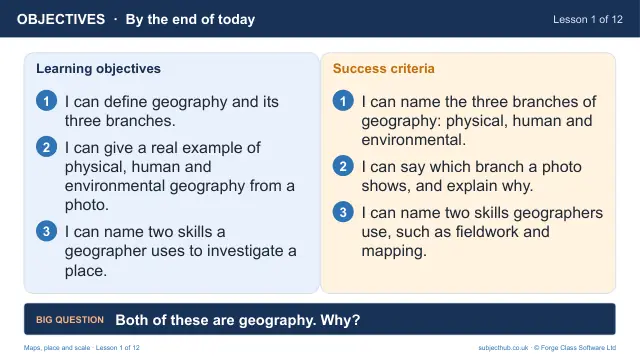
- Lesson pack · L1What is geography? Physical, human and environmentalFree
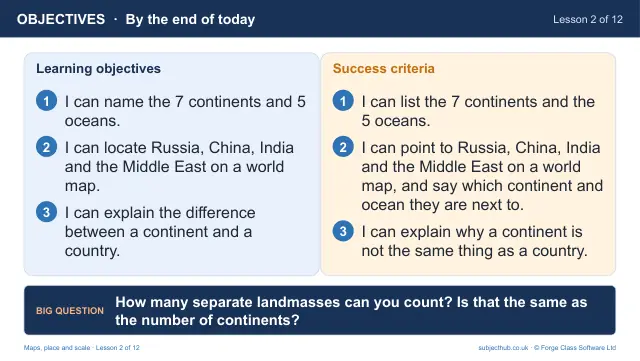
- Lesson pack · L2Continents, oceans and the world mapSubscription
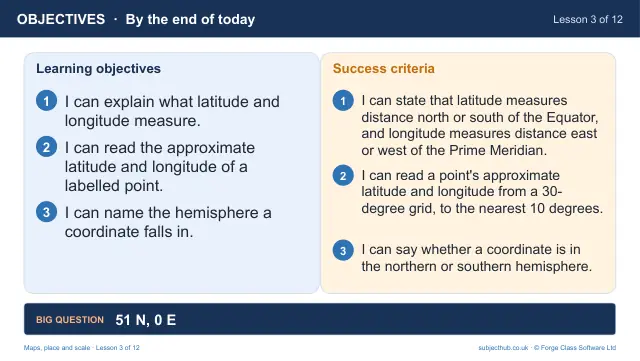
- Lesson pack · L3Latitude and longitude: finding any place on EarthSubscription
- Lesson pack · L4Map projections: why does Greenland look so big?Subscription
- Lesson pack · L5The UK and the British Isles: an atlas investigationSubscription
- Lesson pack · L6Direction and map symbols: reading an OS mapSubscription
- Lesson pack · L7Four-figure grid referencesSubscription
- Lesson pack · L9Scale and distanceSubscription